Felix Carter · 27 September 2026
Stone's Hidden Role in Temperature Regulation for Off-Grid Homesteads in Mountainous Regions
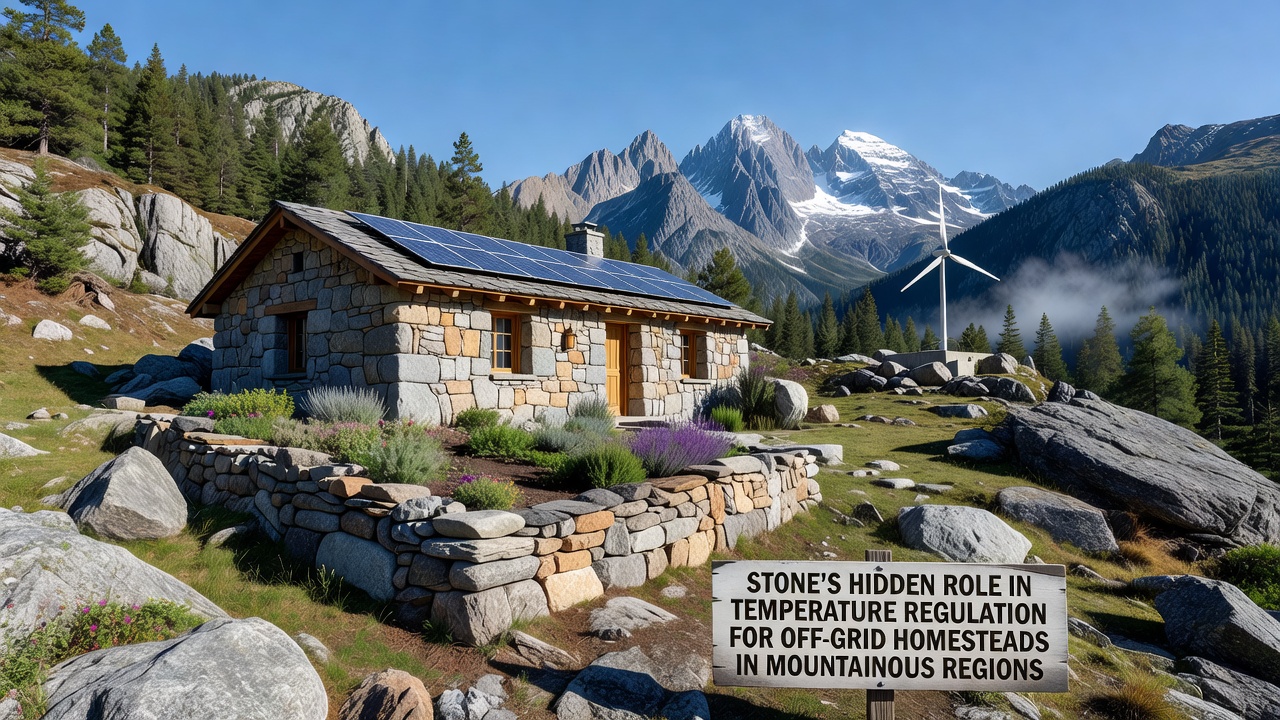
Stone functions as an effective thermal mass material in off-grid homesteads because its high density and specific heat capacity allow it to absorb excess daytime heat and release that stored energy gradually during cooler nighttime hours, and this process proves especially valuable in mountainous zones where daily temperature swings often exceed 20 degrees Celsius. Researchers have documented these patterns across various elevations, and data from monitoring stations in the Rocky Mountains indicate consistent benefits when builders incorporate local stone directly into floors, walls, and interior partitions.Thermal Properties of Stone in Variable Climates
Stone materials such as granite, limestone, and basalt exhibit thermal conductivity rates that range from 1.7 to 3.5 watts per meter kelvin depending on mineral composition, while their volumetric heat capacity typically falls between 1.8 and 2.4 megajoules per cubic meter, according to laboratory tests conducted by materials science teams at several universities. These characteristics enable stone to moderate indoor conditions without mechanical systems, and builders in high-altitude locations have applied this principle for centuries by constructing thick masonry elements that interact with solar gain through south-facing windows.
Diurnal temperature fluctuations intensify with elevation because thinner air allows faster radiative heat loss after sunset, yet the same stone surfaces that warm under direct sunlight during the day continue radiating warmth hours later, and this natural cycle reduces the need for supplemental fuel sources in isolated homesteads.
Integration Strategies for Off-Grid Sites
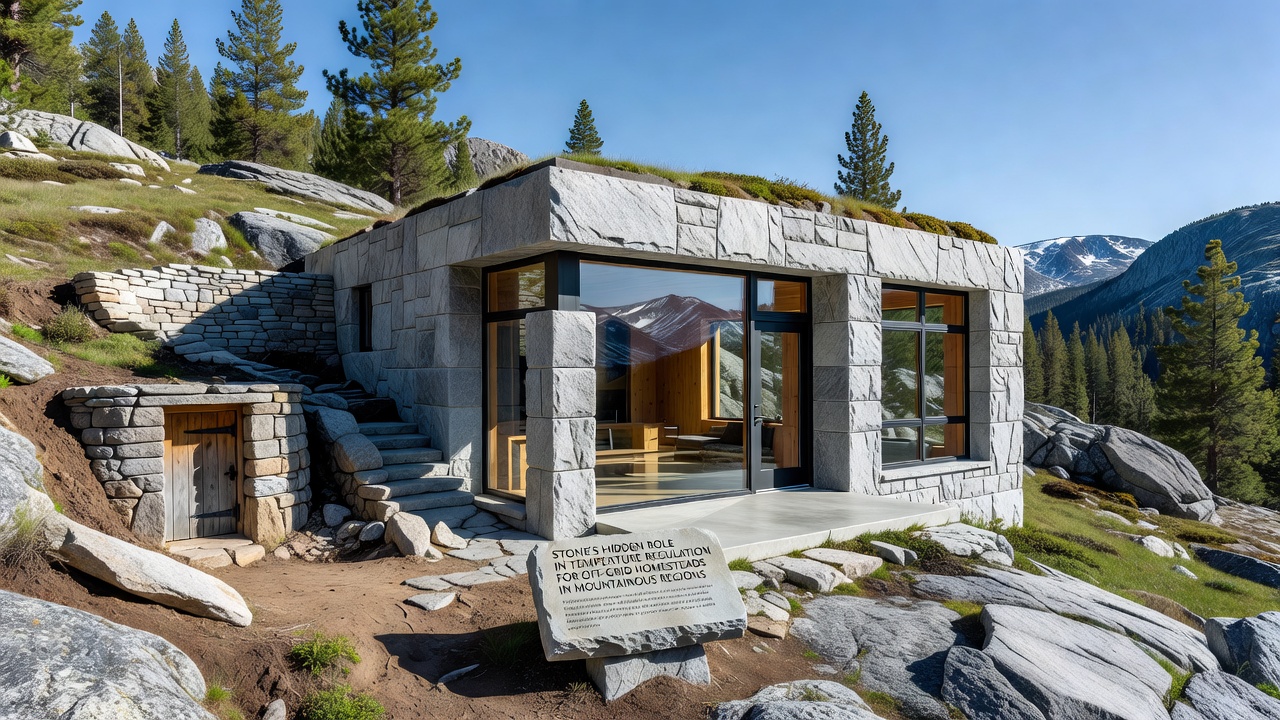
Designers position stone mass elements to receive direct solar exposure through carefully oriented glazing while shielding them from excessive summer radiation with overhangs and deciduous vegetation, and the result creates a passive system that maintains habitable temperatures year-round. In practice, one homestead in the Sierra Nevada range embedded 30 centimeters of local granite flooring over a insulated slab, which absorbed midday heat and released it steadily through evening hours, and temperature logs from that site recorded indoor stability within a 4-degree range even when outdoor conditions varied by 25 degrees.
Additional techniques include constructing interior stone trombe walls behind glazing assemblies and using rubble-filled gabion baskets as partition elements that double as heat reservoirs, and these approaches align with off-grid priorities because they require no electricity or moving parts once installed.
Regional Adaptations and Performance Data
Builders in the Canadian Rockies have adapted similar methods using locally quarried materials to address longer heating seasons, and reports from Natural Resources Canada highlight how stone mass combined with airtight envelopes lowered annual heating demand by measurable percentages in monitored structures. Meanwhile, projects in the Australian Alps demonstrate parallel results with different stone types, where researchers recorded reduced peak temperature swings inside dwellings that incorporated thermal mass compared with lightweight construction methods.
Performance improves when stone surfaces remain exposed rather than covered with carpets or drywall, because direct contact with room air allows faster heat exchange, and observers note that moisture content within porous stones can further influence effective heat capacity through phase-change effects during freeze-thaw cycles common at elevation.
Considerations for Long-Term Durability
Stone installations must account for freeze-thaw cycles and seismic activity typical in mountainous terrain, and proper detailing with expansion joints plus adequate drainage prevents cracking that could compromise thermal performance over decades. Maintenance involves occasional cleaning to preserve surface emissivity, yet the material itself resists degradation far better than many synthetic alternatives under harsh weather exposure.
Recent monitoring initiatives extending through September 2026 continue to track energy balances in several test homesteads, and preliminary figures reveal sustained reductions in auxiliary heating requirements across multiple winters when stone mass is sized appropriately to the building's volume and glazing area.
Conclusion
Stone therefore serves a practical function in temperature regulation for off-grid homesteads by leveraging inherent physical properties that interact with local climate patterns, and evidence from field studies across different mountain regions confirms measurable stabilization of indoor conditions without reliance on external power inputs. Those who study these systems continue to refine placement and sizing guidelines based on accumulating performance records, while builders apply the same principles using regionally available materials to achieve reliable results in demanding environments.