Jakob Reed · 25 October 2026
Investigating Limestone's Capacity for Seasonal Heat Storage in Underground Farming Facilities Across Temperate Zones
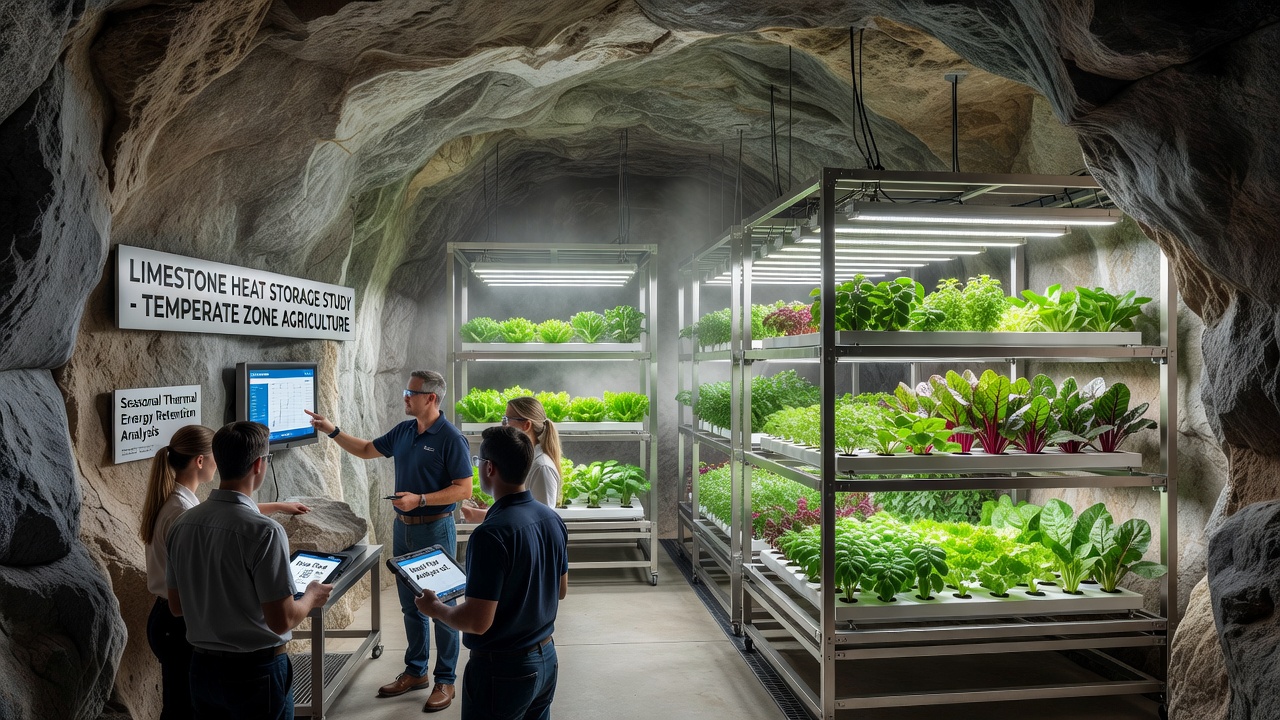
Seasonal heat storage using limestone has drawn attention from agricultural engineers who examine how this common sedimentary rock can capture excess thermal energy during warmer months and release it when temperatures drop in temperate regions. Limestone consists primarily of calcium carbonate with varying porosity levels that allow it to absorb and retain heat effectively under controlled underground conditions. Studies conducted in facilities across parts of North America and northern Europe demonstrate that the material's specific heat capacity ranges between 0.88 and 0.92 kilojoules per kilogram per degree Celsius depending on mineral composition and moisture content.
Thermal Properties and Storage Mechanisms
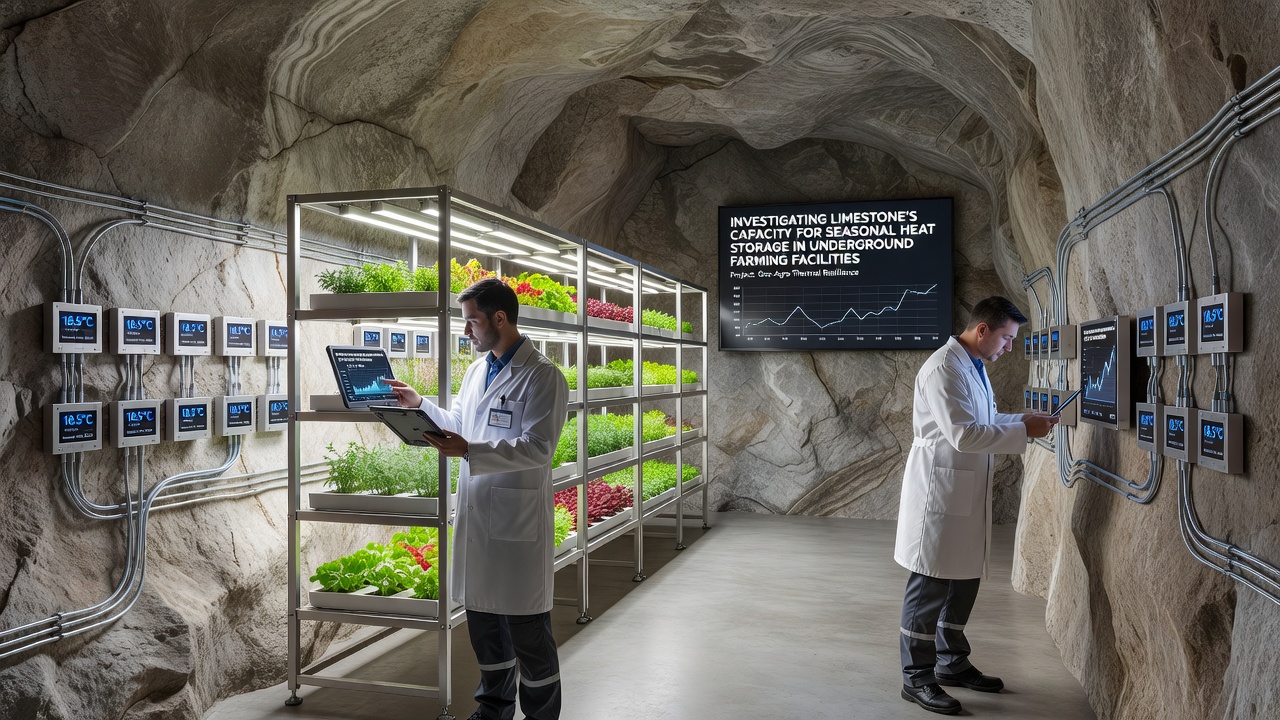
Researchers measure limestone's performance through laboratory tests that track temperature gradients over extended periods and field experiments that monitor heat transfer rates in excavated chambers. Data collected from sites in the Midwest United States indicate that limestone layers can maintain temperature differentials of up to 15 degrees Celsius between summer charging phases and winter discharge phases when properly insulated. The rock's natural fractures and bedding planes create pathways for air or water circulation systems that enhance convective heat exchange while the solid matrix provides conductive storage capacity. Engineers combine these characteristics with ventilation networks to move warmed air from surface collectors into underground limestone beds during periods of high solar input.
Implementation in Temperate Zone Farming Operations
Underground farming facilities in temperate zones face seasonal temperature swings that affect crop cycles and energy demands for climate control. Limestone-based storage systems address these challenges by storing heat collected from greenhouse roofs or ground-source loops and redistributing it through embedded pipes or air ducts. Operators in southern Ontario and parts of Scandinavia have integrated limestone beds beneath growing areas where the stored energy supports root zone warming and reduces reliance on conventional heating fuels during winter months. Measurements from operational sites show that properly sized limestone volumes can supply 40 to 60 percent of annual heating requirements when combined with basic insulation and airflow management.
Recent Field Investigations and Data Collection
Multiple research teams continue to gather performance metrics from pilot installations that began operation in 2023 and 2024. Reports compiled by the European Commission's Joint Research Centre highlight efficiency gains in limestone systems located in central France and southern Germany where annual temperature amplitudes align well with storage cycles. Meanwhile investigators at Canadian agricultural research stations track energy balances in limestone-equipped facilities and compare results against conventional geothermal approaches. Field trials scheduled for final data analysis in October 2026 will provide updated figures on long-term degradation rates and maintenance requirements under varying humidity conditions typical of temperate climates.
Material Selection and Site Considerations
Selection of limestone for these applications depends on density measurements and thermal conductivity values that vary between 1.2 and 2.5 watts per meter per kelvin across different quarry sources. Geologists recommend testing samples from local deposits because impurities such as clay or silica alter both storage capacity and structural stability over multi-year cycles. Site assessments also evaluate groundwater flow patterns because excessive moisture can reduce effective heat retention while increasing risks of mineral dissolution. Planners therefore combine geological surveys wth hydrological modeling before finalizing chamber dimensions and airflow routing.
Integration with Existing Agricultural Infrastructure
Facilities already equipped with underground growing spaces can retrofit limestone storage by excavating additional volume beneath existing floors and installing distribution piping. Several operations in the Pacific Northwest have documented reduced peak energy loads after connecting limestone beds to their ventilation systems. These modifications allow excess heat captured during daytime hours to circulate through the rock mass overnight and across seasons without requiring additional mechanical components beyond standard fans and dampers. Economic analyses from the U.S. Department of Energy's Office of Energy Efficiency and Renewable Energy show payback periods ranging from seven to twelve years when limestone systems offset natural gas or electricity consumption in mid-latitude locations.
Conclusion
Continued monitoring of limestone heat storage installations across temperate zones supplies quantitative evidence on performance consistency and material durability. Agricultural operators and research institutions maintain shared databases that track temperature profiles, energy savings, and system adjustments required after initial commissioning. These records support iterative design refinements that match limestone properties to specific climatic patterns and crop requirements while maintaining structural integrity of underground spaces.