Frankie Braun · 11 October 2026
How Mineral Compositions in Stone Influence Heat Retention Within Elevated Greenhouse Designs for Year-Round Crop Production
Stone materials serve as thermal mass elements in elevated greenhouse structures where mineral makeup directly shapes how heat gets absorbed, stored, and released over daily cycles. Different stones contain quartz, feldspar, mica, or basalt fragments that alter specific heat capacity and conductivity rates, which in turn stabilize interior temperatures for continuous vegetable and herb cultivation even when outdoor conditions fluctuate.
Mineral Properties and Thermal Behavior
Quartz-rich stones exhibit higher thermal conductivity around 7.5 W/mK while basalt formations deliver greater density values near 3.0 g/cm³ that support prolonged heat release after sunset. Limestone composed primarily of calcite shows moderate specific heat near 0.88 J/g°C, which allows moderate warming during daylight hours followed by gradual evening cooling. Researchers at several agricultural testing sites have measured these differences through embedded sensors that track temperature gradients across stone layers placed in raised beds.
Granite samples containing higher feldspar percentages retain less heat compared to those dominated by amphibole minerals, and field data collected through 2025 growing seasons confirm that mixtures with 40 percent basalt aggregate extend stable temperature windows by several hours each night. Observers note that particle size also plays a role because finer mineral grains increase surface area for heat exchange while coarser fragments slow conduction rates.
Integration in Elevated Greenhouse Structures
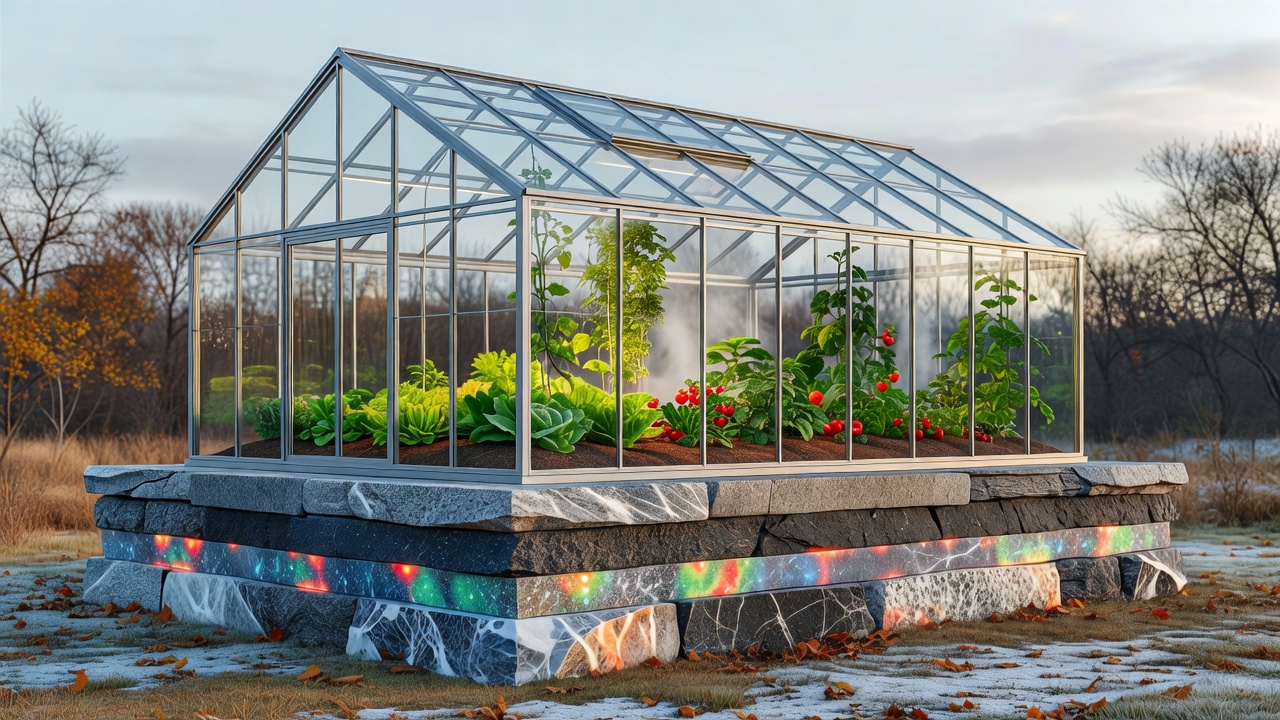
Elevated designs position stone layers beneath soil beds or within perimeter walls at heights between 0.6 and 1.2 meters to capture radiant energy from both solar gain and supplemental lighting systems. Builders arrange stones so that mineral-dense sections face southern exposures in northern hemisphere installations, allowing maximum absorption during peak irradiance periods. This arrangement creates vertical temperature stratification that protects root zones while keeping foliage areas within optimal ranges for crops such as tomatoes and leafy greens.
Installation protocols often include vapor barriers beneath the stone mass to prevent moisture migration that could reduce effective heat capacity. Ventilation ducts integrated into the stone assemblies allow controlled airflow that redistributes stored warmth without rapid dissipation. Data from multiple commercial operations indicate that such configurations lower nighttime heating demands by measurable percentages when outdoor temperatures drop below 5°C.
Effects on Year-Round Crop Cycles
Consistent root zone temperatures between 15°C and 22°C support extended growing periods for cool-season crops during winter months and prevent heat stress in summer varieties. Mineral composition influences how quickly beds recover after irrigation events because water acts as a secondary heat sink that interacts with the stone matrix. Trials conducted across varied climate zones show that basalt-dominant beds maintain narrower diurnal swings compared to limestone setups, which helps sustain photosynthesis rates and reduces blossom drop in fruiting plants.
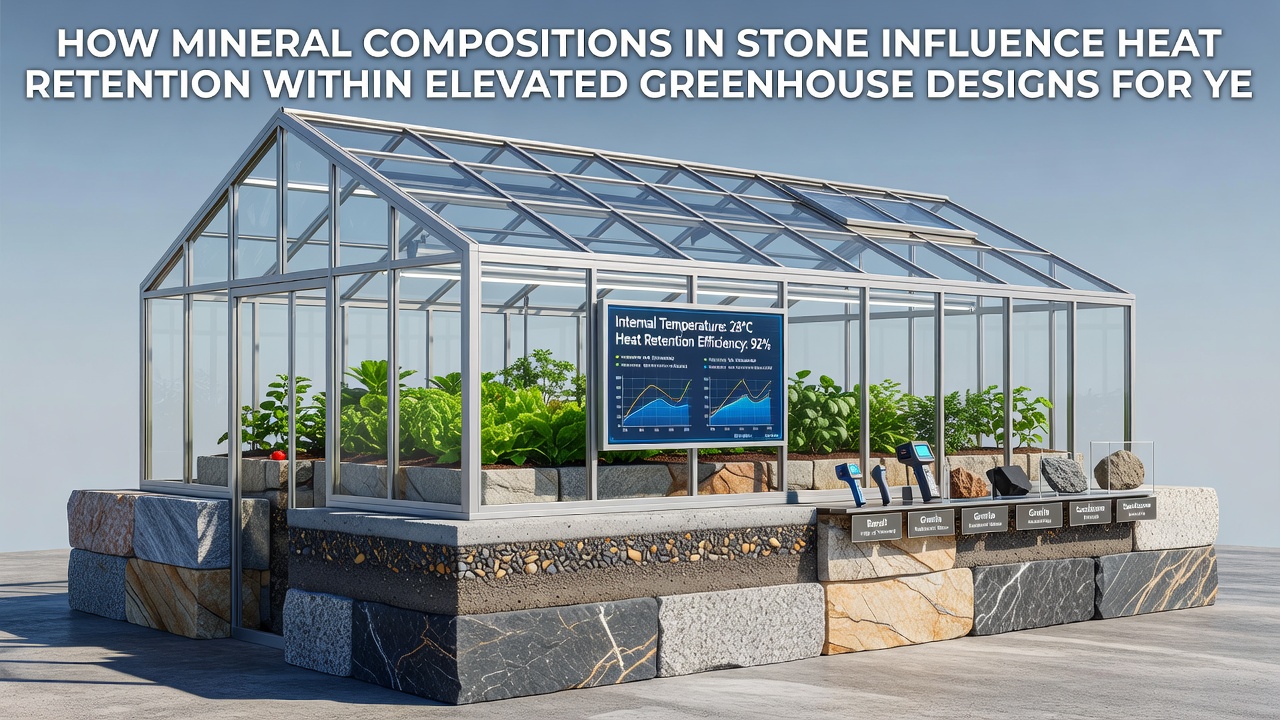
Monitoring programs launched in early 2026 continue to track performance metrics at several facilities where stone selections were adjusted based on local mineral availability. Results compiled through October 2026 demonstrate that targeted mineral blends correlate with higher cumulative yield figures for continuous production schedules. The same datasets reveal that conductivity differences become most pronounced when ambient humidity levels exceed 70 percent, because moist air enhances convective transfer at stone surfaces.
Regional Material Sourcing and Performance Data
Suppliers in western Canada provide basalt aggregates that testing laboratories rate highly for heat retention under subzero exterior conditions, while European producers supply quartz-feldspar blends suited to milder Mediterranean winters. A report issued by the Australian Department of Agriculture, Water and the Environment outlines how regional stone sources affect greenhouse energy balances across different latitudes. Growers who incorporate these materials report fewer supplemental heating interventions during shoulder seasons when solar angles change rapidly.
Further analysis from university extension programs in the United States confirms that stone particle gradation influences both heat storage duration and airflow resistance within bed structures. Operators adjust layer thicknesses between 20 and 40 centimeters depending on the dominant mineral type to achieve desired thermal lag times. These adjustments prove especially useful in automated systems that coordinate heating with ventilation schedules.
Conclusion
Mineral composition determines the rate and duration of heat movement through stone elements incorporated into elevated greenhouse beds and walls. Specific combinations of quartz, basalt, and calcite alter conductivity and storage capacity in ways that directly support stable growing conditions for year-round crop output. Continued measurement programs provide quantitative guidance on material selection matched to regional climate patterns and crop requirements, allowing designers to optimize thermal performance through deliberate choices in stone sourcing and placement.